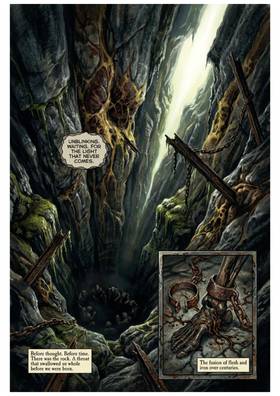
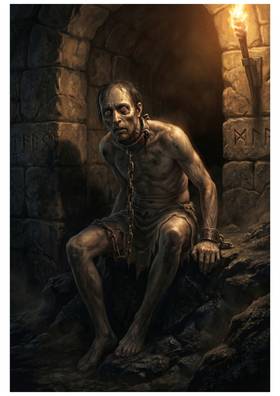
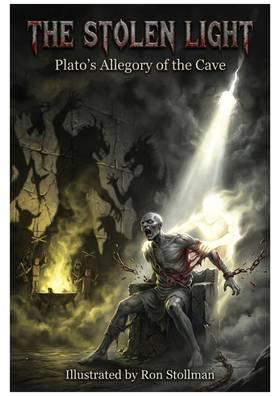
Plato's Allegory of the Cave is a philosophical nightmare set in a vast, cold abyss where humanity is physically "shot cold" into the rock, chained and forced to worship the flat, fleeting shadows cast by a pathetic "stolen light." The entire society is a tragic hierarchy built on guessing the patterns of these silhouettes, until a single prisoner is violently wrenched free—a painful, agonizing ascent that culminates not in joy, but in blinding, fiery torment upon seeing the true Sun, the ultimate source of reality. The despair is absolute when the philosopher returns, now blind to the familiar shadows, only to be met with ridicule and homicidal rage; he is condemned by those who prefer the comforting, simple lie of the chain to the terrifying, complex burden of the truth, confirming that humanity is destined to remain willingly imprisoned in the illusion.
Plato's Allegory of the Cave is a philosophical nightmare set in a vast, cold abyss where humanity is physically "shot cold" into the rock, chained and forced to worship the flat, fleeting shadows cast by a pathetic "stolen light." The entire society is a tragic hierarchy built on guessing the patterns of these silhouettes, until a single prisoner is violently wrenched free—a painful, agonizing ascent that culminates not in joy, but in blinding, fiery torment upon seeing the true Sun, the ultimate source of reality. The despair is absolute when the philosopher returns, now blind to the familiar shadows, only to be met with ridicule and homicidal rage; he is condemned by those who prefer the comforting, simple lie of the chain to the terrifying, complex burden of the truth, confirming that humanity is destined to remain willingly imprisoned in the illusion.


 English