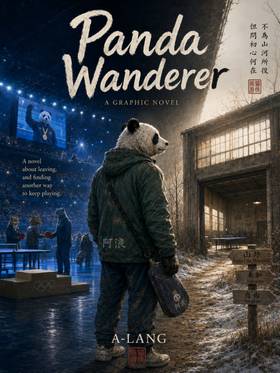
After winning Olympic gold, A-Lang, the most famous table tennis player in the world, walks away from the federation that built him into a symbol and forgot he was a person. With one bag, one paddle case, and no plan beyond leaving, the panda begins moving through train stations, clubs, ports, sponsor events, hotel rooms, restaurant kitchens, livestream studios, and half-forgotten arenas across a contemporary animal world.
As he wanders, A-Lang discovers players and communities still holding onto the fragile human meaning of sport: a veterans' league, a harbor table, a family restaurant, a commercial machine, a young rival, and strangers who do not want to own him. What begins as escape slowly becomes research for another way to exist inside competition, fame, commerce, and fandom without being destroyed by them.
Panda Wanderer is a literary sports novel about table tennis, food, digital culture, loneliness, and the stubborn work of building something gentler than the system that made you famous.
After winning Olympic gold, A-Lang, the most famous table tennis player in the world, walks away from the federation that built him into a symbol and forgot he was a person. With one bag, one paddle case, and no plan beyond leaving, the panda begins moving through train stations, clubs, ports, sponsor events, hotel rooms, restaurant kitchens, livestream studios, and half-forgotten arenas across a contemporary animal world.
As he wanders, A-Lang discovers players and communities still holding onto the fragile human meaning of sport: a veterans' league, a harbor table, a family restaurant, a commercial machine, a young rival, and strangers who do not want to own him. What begins as escape slowly becomes research for another way to exist inside competition, fame, commerce, and fandom without being destroyed by them.
Panda Wanderer is a literary sports novel about table tennis, food, digital culture, loneliness, and the stubborn work of building something gentler than the system that made you famous.


 English